The Pantheon Of Seven Saints
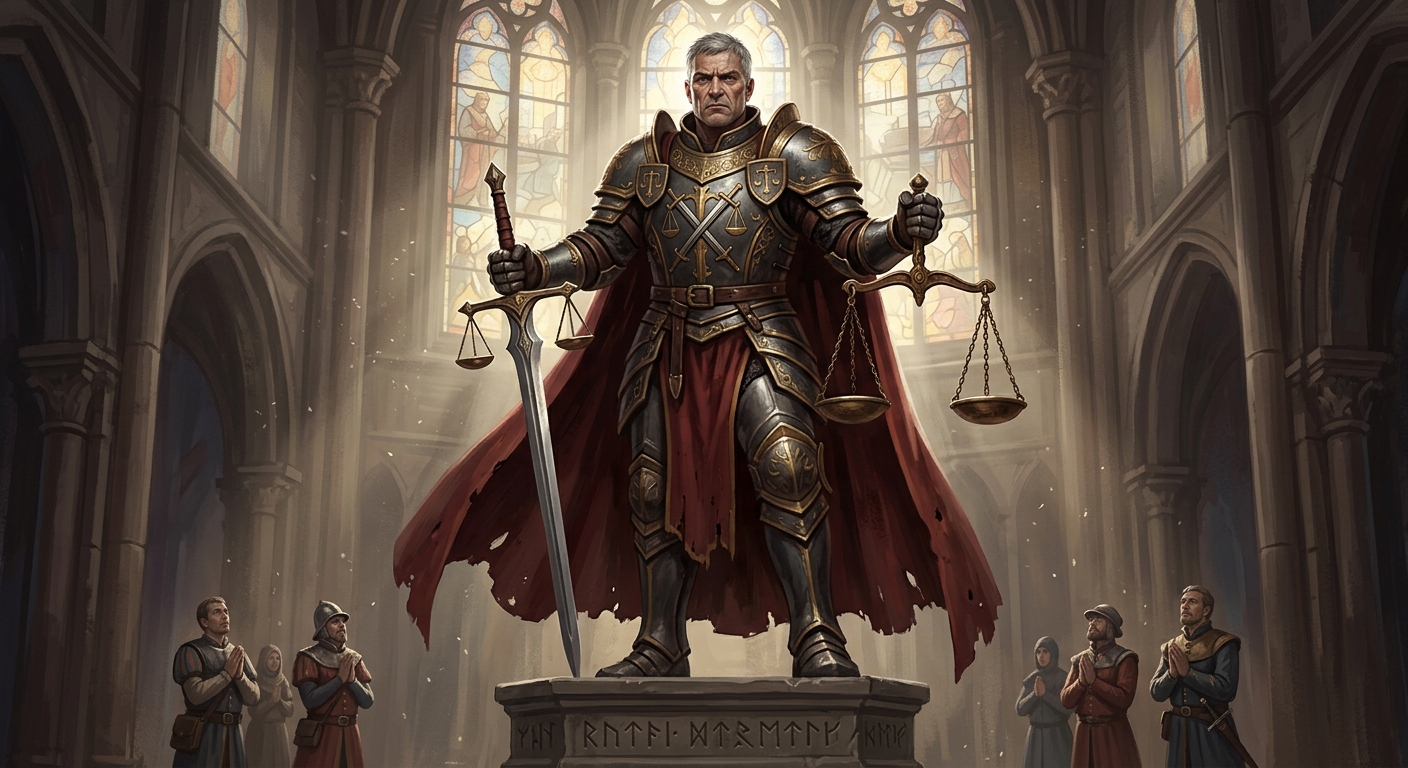
The Pantheon of Seven Saints
The Pantheon of Seven Saints is the dominant religion across the Eastern and Northern continents of Aethervale. It worships seven ascended mortals who supposedly shaped the modern era following the Age of Ruin. While scholars debate their actual historical existence versus their mythological status, their teachings form the moral bedrock of human, dwarven, and even some elven societies.
The Saints
- Saint Valerius the Just (The Lawbringer): Depicted as a stern human paladin wielding a scales and a longsword. He is the patron of justice, governance, and the noble houses of Kigum. Worship is mandatory for city guards and magistrates.
- Saint Thrain the Builder (The Forge-Father): A dwarven cleric who is said to have laid the first stones of Steamfort. He is revered by engineers, masons, and inventors. His symbol is an anvil crossed with a cog.
- Saint Elara the Green (The Warden): An elven ranger who taught mortals how to survive the Mana Wastes and heal corrupted land. Hunters, rangers, and druids pray to her. Her shrines are often living trees deep in the forests of Lemmion.
- Saint Kaelen the Swift (The Shadow): A halfling rogue who embodies luck, travel, and the protection of the downtrodden. Officially, he is the patron of merchants and travelers. Unofficially, thieves and smugglers offer him tithes for successful runs.
- Saint Aethelgard the Wise (The Arcanist): The supposed founder of the Grand Arcane Bank and the first mortal to safely refine Aether. Mages and scholars revere her. Her symbol is a glowing, faceted crystal.
- Saint Morwen the Compassionate (The Healer): The patron of medicine, mercy, and agriculture. Temples to Morwen operate as hospitals and alms-houses throughout Aethervale.
- Saint Orik the Shield (The Martyr): A legendary warrior who held off a demonic horde at the close of the Age of Ruin, sacrificing himself to close a major rift. He is the patron of soldiers, mercenaries, and final stands.
Worship and Practices
Worship varies by region. In Kigum, ceremonies are grand, formal affairs held in towering cathedrals of white marble. In Steamfort, worship of Thrain involves ringing massive bells and offering newly crafted gears at roaring braziers. In the rural settlements, shrines are modest, often featuring small wooden carvings of the Saints.