Saint Thrain
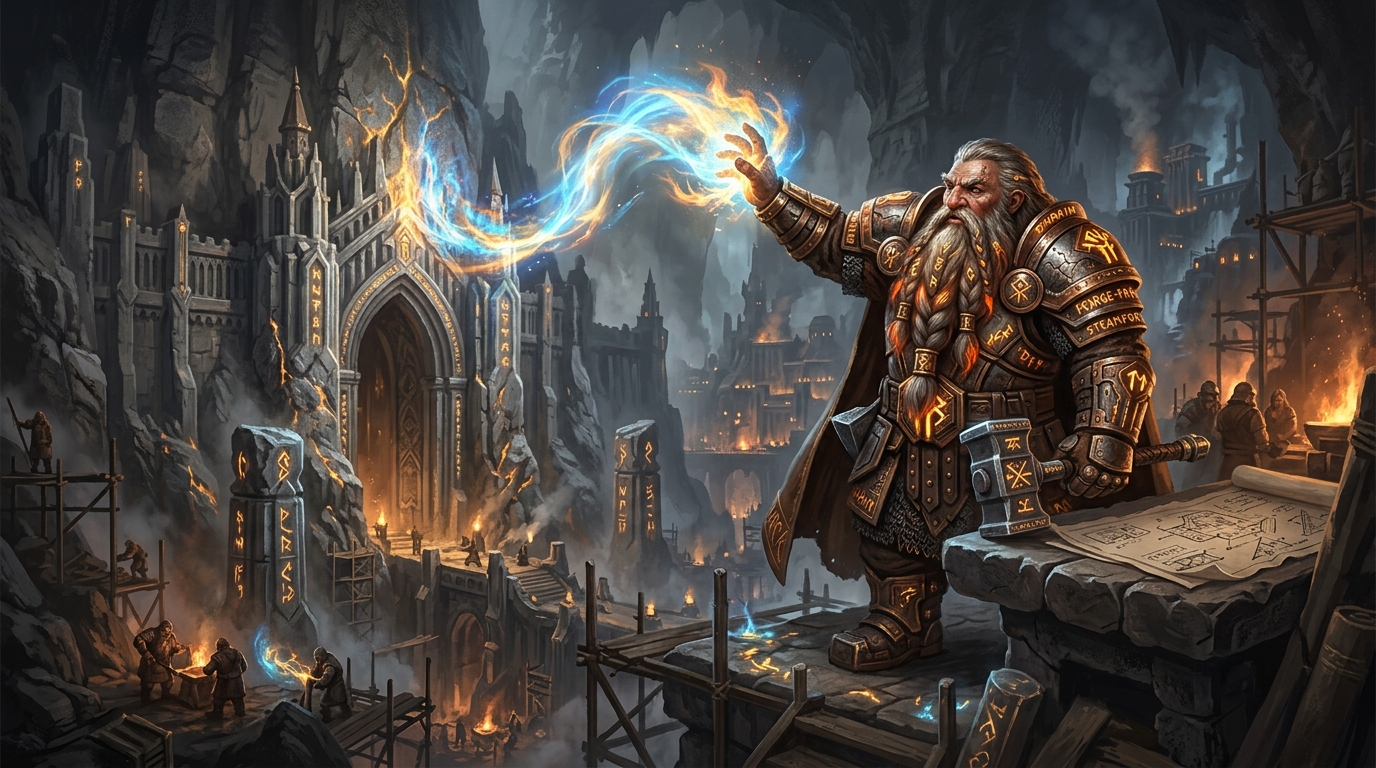
Saint Thrain the Builder
Saint Thrain the Builder, known as the Forge-Father, is the patron saint of engineers, masons, and inventors, particularly revered by the dwarven populations of Steamfort and Dal-Dur. According to dwarven scripture, Thrain was the architect who designed the original fortifications of Steamfort and laid the first stones of the Great Anchor-Stones alongside High King Durnar. He is credited with "speaking the language of stone," a mythical ability that allowed him to shape raw rock and metal with nothing but a rhythmic hammer-strike and a deep understanding of Aetheric resonance. He is traditionally depicted as a massive dwarf with a beard made of solidified magma, holding an anvil crossed with a complex clockwork cog.
Thrain's most celebrated achievement is the construction of "The Sky-Forge," a legendary, steam-powered furnace built within the heart of a dormant volcano. It was here that Thrain supposedly forged the first Aether-Engine, combining raw magical crystals with the power of geothermal steam to create a source of energy that was clean, predictable, and incredibly potent. The legends claim that Thrain worked at the forge for a hundred days without sleep, his hammer-strikes creating the first rhythmic "heartbeat" of the industrial world. He eventually vanished into the deepest tunnels of the North, leaving behind his blueprints and his sacred hammer, which are now kept in the highest vault of the Ironbeard Syndicate.
In Steamfort, the worship of Saint Thrain is inseparable from daily life. Every factory, mine, and airship features a small shrine to the Forge-Father, and every major engineering project begins with a "Blessing of the Anvil." His followers believe that technical innovation is the highest form of worship, and that to build a more efficient machine is to honor Thrain's divine plan for the world. The Order of the Gear, a group of warrior-engineers dedicated to his teachings, provides technical support and defense for Steamfort's most critical infrastructure. For the dwarves, Thrain is a symbol of their mastery over the harsh environment of the North and their role as the architects of the modern, mechanized era.