Tlincalli
Tlincalli
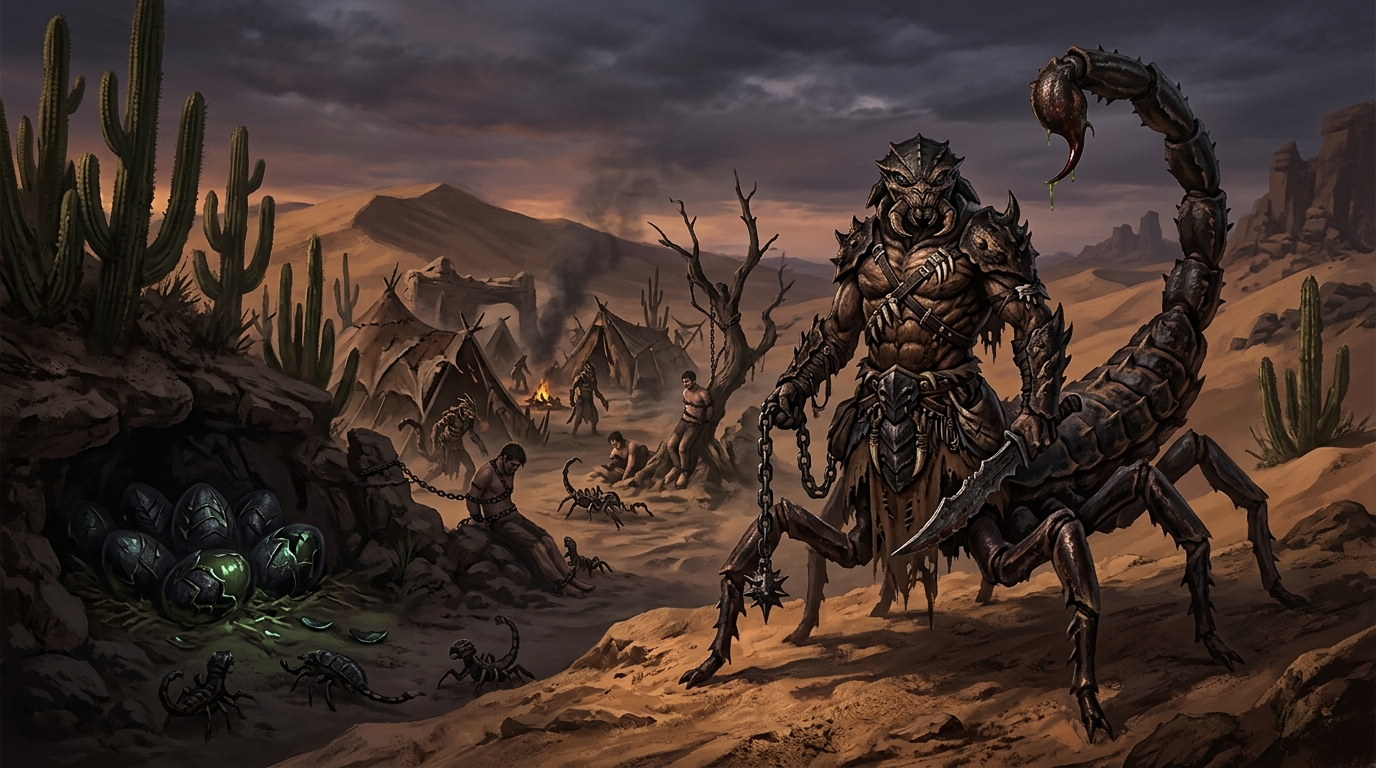
Tlincallis, also called scorpion folk, are chitin-covered creatures, humanoid from the waist up with the lower body of an enormous scorpion, complete with a stinger at the end of a long tail.
Desert Nomads
Tlincallis live austerely. They range across arid lands, hunting at dawn and dusk. In the hours between, they wait out the day's heat or the night's cold by burying themselves in loose sand or earth or, if the terrain proves too inflexible, lurking in ruins or shallow caves. A tribe of tlincallis stays in one place for only as long as the hunting is good in the immediate area, though they might visit the same way stations over and over during their wanderings. The tribe also settles down temporarily whenever it's time to lay eggs and hatch a new brood of young.
Poisonous Eggs
Tlincallis deposit their eggs in warm places out of direct sunlight, often amid a stand of cacti near their present encampment. There the eggs lie protected by hard shells coated in paralytic poison similar to that produced by their stingers. A would-be predator that dares to break an egg is defenseless against the tlincallis that come to investigate.
Horrid Kidnappers
Tlincallis eat what they kill, but they also take some of their prey alive when they have new mouths to feed. After using their stingers to paralyze victims and their spiked chains to bind them, tlincallis take these prisoners back to their encampment and tie them to cactus or rock formations. There, victims wait until the sun sets and the newly hatched young emerge from the lair to eat them alive.
Prideful Hunters
Tlincallis see themselves as great hunters. If a tlincalli tribe encounters a more powerful hunter, such as a blue dragon, the tribe's leader must decide whether the group becomes obedient to the superior hunter, moves on, or fights to the death to defeat it.
Makeshift Weapons and Objects
Tlincallis are uncivilized and don't build cities, make clothing, or mine metals. Instead, they scavenge what they need or want. They do, however, know how to melt down scavenged metal to forge crude weapons and tools.
The shells of tlincalli have a poisonous coating that can be boiled off without losing its paralyzing power, and reused by alchemists. Careful handling required.